Conversations with an Outside Director: Diverse Perspectives on the Future of Work
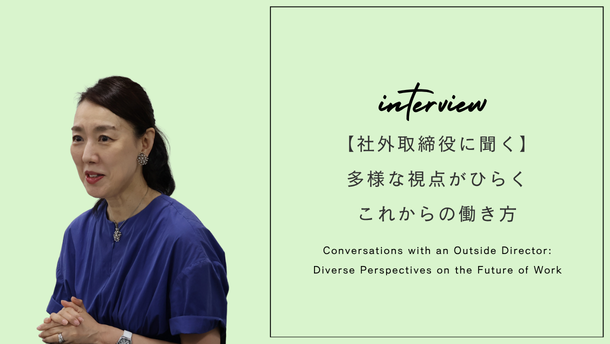
At our company, we respect diversity and aim to create a workplace where each individual can thrive as their true self. To that end, we held a cross-talk session featuring outside directors with extensive experience and expertise, along with our employees. In this initiative, we will explore new values and the future of our organization together with our outside directors, who are leading the way in promoting women’s advancement.
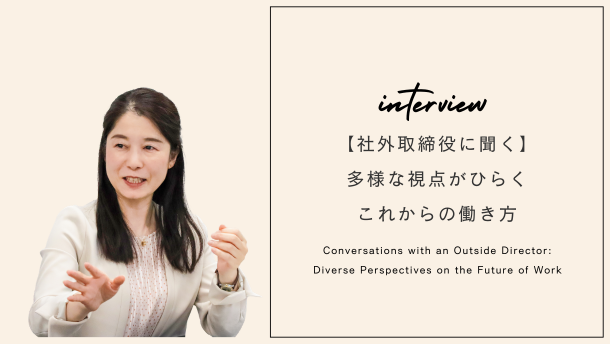
For this article, two female employees interviewed Ms. Seiko Nagai, a member of the board of directors.

Seiko Nagai
The interviewers are two of our female managers 🎤
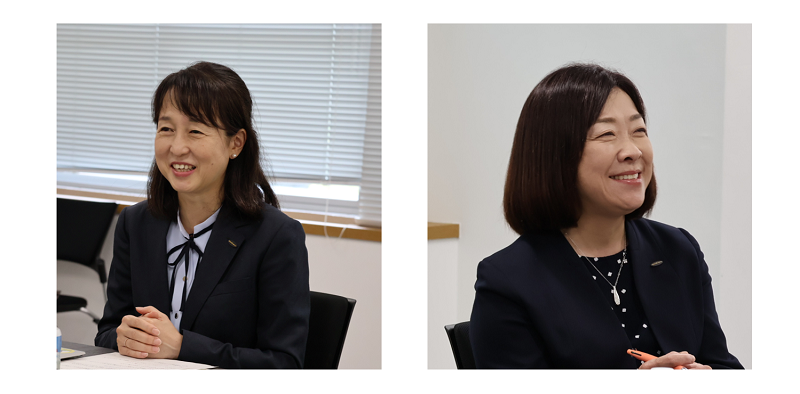
Aircraft Division, O.T.
Special Purpose Truck Division, F.Y.
On Career Turning Points
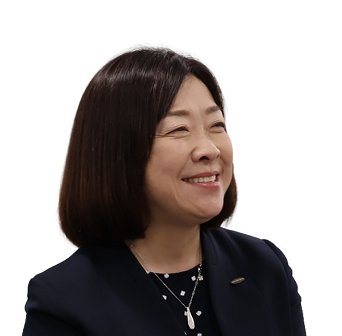 F.Y.
As a manager at the time, I found myself on the front lines of numerous challenges, including shareholder relations. I was also responsible for difficult tasks such as supporting employees' mental well-being and making painful decisions that affected the employment of my colleagues. There were moments when I considered leaving the company myself. However, I resolved to stay and do my part until JAL's relisting on the stock exchange. After the relisting, I was entrusted with the integration of group companies and continued to take on the roles and responsibilities the company asked of me.
Later, an opportunity led me to join the faculty of Kansai Gaidai University. While some of my students aspired to careers in the airline industry, many went on to pursue opportunities in a wide range of fields, including manufacturing. Seeing their diverse career paths inspired me to broaden my own horizons and gain experience beyond the aviation sector. In that sense, being able to embark on a new chapter in my career as an Outside Director at ShinMaywa was also a significant turning point in my professional journey.
 Nagai-san
A Shared Decision-Making Framework Supports Organizational Growth
Nagai-sanF.Y.At the same time, JAL also introduced the JAL Philosophy*2" and the JAL Group's shared values gradually became embedded throughout the organization, ultimately contributing to its remarkable turnaround. While systems and processes can easily lose their effectiveness over time, I believe this initiative has continued to endure even after the company's recovery because the philosophy became deeply rooted in the organization's culture. Through opportunities for direct dialogue between Kazuo Inamori and employees, everyone was able to gain a shared understanding of the company's direction. This encouraged each employee to view the company's sustainable growth as a personal responsibility rather than someone else's concern.
One of the most memorable principles of the philosophy was the idea that decisions should be based on what is right as a human being. At the time, many employees were under intense pressure to meet numerical targets. When one employee sought advice from Mr. Inamori, he explained that some aspects of the philosophy might at times appear to be in conflict with one another. However, he emphasized that the most important thing was to make decisions based on what is morally right and how a person ought to act. That message left a lasting impression on me. Especially in a challenging environment, I came to appreciate the importance of having a guiding set of principles that helps people return to the fundamentals when faced with difficult decisions.
The philosophy served as a company-wide decision-making framework shared by everyone, from senior leadership to frontline employees. The people working at JAL did not suddenly change before and after the bankruptcy. What changed was that everyone embraced and put the same values into practice. As a result, the organization's sense of unity and cohesion grew dramatically. I believe that shared commitment was a key factor in JAL's successful turnaround.
Nagai-san- *1 Japan Airlines Co., Ltd. Corporate Website, "Divisional Profitability Management System" (https://www.jal.com/ja-jp/about/profitability_system/)
- *2"JAL Philosophy," Japan Airlines Co., Ltd. Corporate Website (https://www.jal.com/ja-jp/about/conduct/)
Dialogue Breaks Down Organizational Barriers
I believe the turning point came when employees were given more opportunities to engage in dialogue with colleagues from other departments through various training programs. Prior to that, interaction across departments was limited, and there was often little understanding of each other's work, challenges, and perspectives. Although every department was ultimately working toward the same goals, serving customers and contributing to the company's success, conflicts could still arise when people lacked insight into the circumstances and priorities of other teams.
At ShinMaywa, each business division serves different customers and develops different products. It is important, and even healthy, for each division to take pride in its expertise and unique strengths. At the same time, however, we must never lose sight of the fact that we are all part of one company and one group: ShinMaywa. A company-wide perspective is cultivated when people from different functions and positions are given more opportunities to engage in dialogue. Through these conversations, they gain a better understanding of one another's roles, challenges, and perspectives, and work together to determine what is best for both the customer and the company. Based on my own experience, I am convinced that these ongoing efforts to foster understanding and collaboration ultimately make an organization stronger and more resilient.
Nagai-sanBeyond Business Unit Boundaries
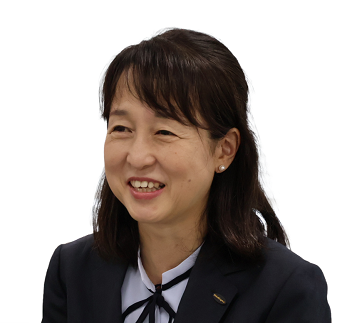 O.T.F.Y.
Building relationships in which people support and help one another, both in good times and in challenging times, is essential. Each business division has its own unique expertise and perspective, and the voices of customers often contain insights that can be valuable beyond a single division. At the heart of every business interaction are people. By understanding and respecting one another's roles, perspectives, and aspirations, and by deepening collaboration from a company-wide perspective, we can create new opportunities for growth. Based on my own experience, I believe this mindset will be increasingly important as we move forward.
Nagai-sanExpectations for ShinMaywa
At the same time, precisely because ShinMaywa is such a strong company, I believe it has even greater potential for growth. When business performance is strong, it is easy to become comfortable with the status quo. However, favorable conditions do not last forever. In addition to building on existing achievements, it is essential to maintain a mindset of taking on new challenges and preparing for the future. Organizations that continue to evolve are those that are willing to look beyond their current success and invest in the opportunities of tomorrow.
Nagai-sanO.T.F.Y.ShinMaywa possesses a unique strength in its technological capabilities, something that cannot be easily replicated by other companies. However, it is important not to become complacent about that strength. We must continue asking ourselves what we want to achieve beyond it and what kind of future we aspire to create. To do so, I believe we must also continue evolving in areas such as talent development, education, and other aspects of human capital management. Through today's discussion, I was once again reminded of the importance of exchanging ideas across organizational and hierarchical boundaries and taking the time to understand one another's perspectives.
I believe that organizations are best equipped to navigate an era of rapid change when everyone is aligned around a common direction and continues to embrace new challenges together. As an Outside Director, I hope to continue contributing by bringing an external perspective to the discussion while encouraging the importance of dialogue, continuous learning, and the mindset shifts that support organizational growth.
And above all, I hope that ShinMaywa will continue to be a company that society values and relies upon by putting its Corporate Principles into practice.
Nagai-san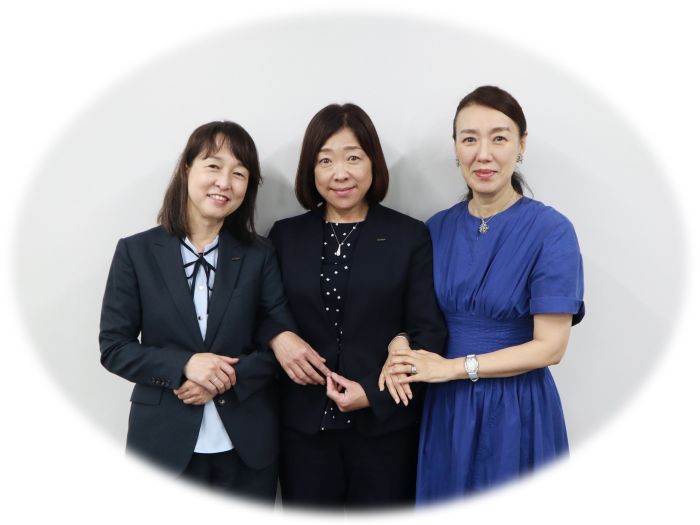

—To be happier and healthier through "heart" x "perceptiveness" x "the power of expression"
Hospitality is a combination of "heart," "perception," and "the ability to express." Actions taken with good intentions are merely self-satisfaction; true hospitality is only realized when hearts connect.
"Heart" refers to the foundation of being a person, encompassing qualities such as honesty, humility, and gratitude. "Perception" is the ability to perceive all events as if they were your own.
Furthermore, the ability to perceive is not only for expressing oneself, but also for receiving thoughts and considerations from others.
For example, the fact that Kansai International Airport has achieved zero lost baggage is due to the ingenuity and efforts of many people. As our awareness increases, we become aware that things we take for granted are actually made possible by the support of others, just like the person on the left in the illustration. And that awareness naturally leads to feelings of gratitude. As this positive cycle spreads, both we ourselves and those around us can live happier and healthier lives.
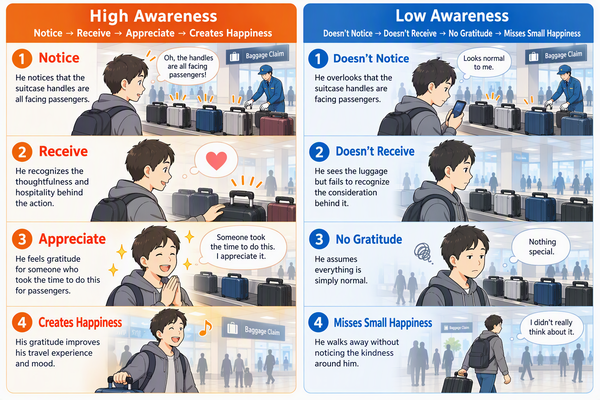
- * This is an image created with Copilot.