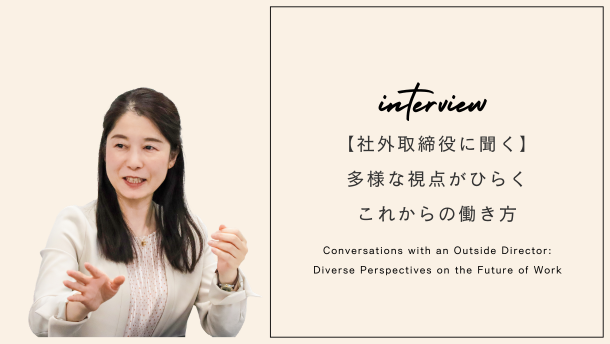

Conversations with an Outside Director: Diverse Perspectives on the Future of Work
At our company, we respect diversity and aim to create a workplace where each individual can thrive as their true self.
To that end, we held a cross-talk session featuring outside directors with extensive experience and expertise, along with our employees. In this initiative, we will explore new values and the future of our organization together with our outside directors, who are leading the way in promoting women’s advancement.
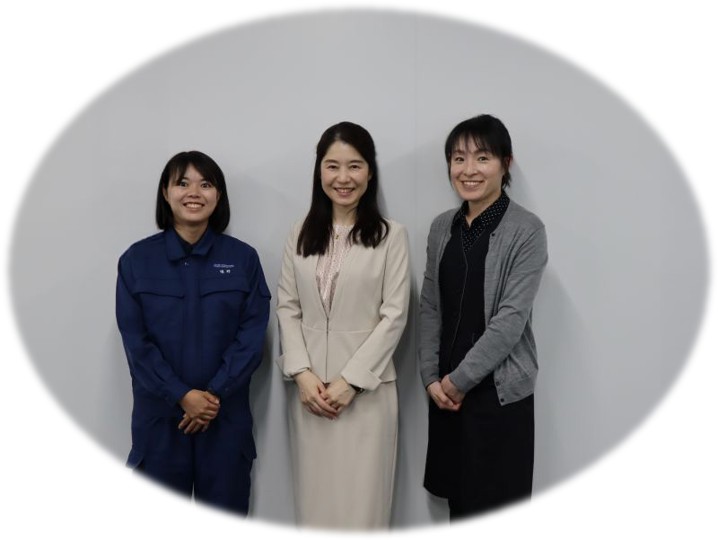
For this article, two female employees interviewed Ms. Eri Sugiyama, a member of the Board of Directors (Audit and Supervisory Committee).
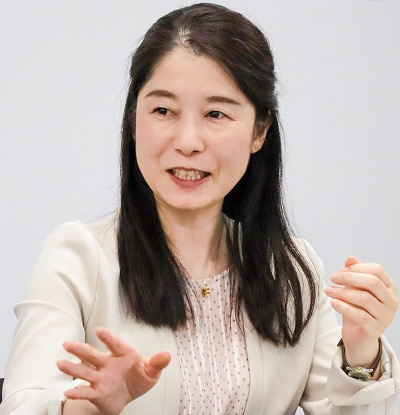
Director and Audit Committee Member, Eri Sugiyama
(Partner Attorney, Habataki Law Office)
The interviewers are two participants from the second cohort “Women’s Leadership Development Program *1” 🎤
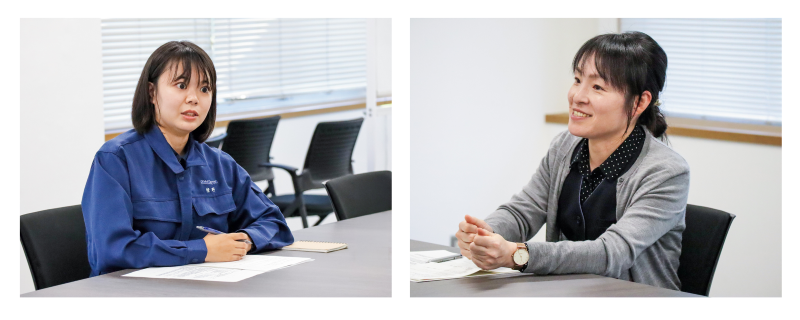
Parking Systems Division, S.M.
Human Resources & General Affairs Department, I.E.
- *1 As part of efforts to improve employee engagement—one of the basic policies of the Mid-Term Management Plan [SG-2026], “Strengthening Human Capital”—a program was implemented at ShinMaywa Industries, Ltd. (Management Policy: Long-term & Medium-term Management Plan)
On Career Turning Points
 I.E.
I.E.I enjoy immersing myself in new environments, so working in financial administration in Tokyo—which was quite different from my practice as a lawyer in Osaka—felt very refreshing.In reality, there were many challenges in terms of knowledge—not only did I have to learn industry laws I was unfamiliar with (such as the Banking Act, the Insurance Business Act, and the Financial Instruments and Exchange Act), but I also had to work hard to learn how to read financial statements in preparation for on-site inspections. However, since lawyers often work independently, I truly experienced a sense of unity and security that comes from being part of an organization and working as a team for the first time.
The change in my “work environment” led to many new insights, and this experience became a major turning point for me.
 Sugiyama-san
About the core values always cherish
 S.M.
S.M.- Giving my all to every job
- Trying Something New
- Listening carefully to what others have to say
- Working as a team
The first is “never cutting corners and always giving my all to any task.” As a lawyer, I make a point of treating every case with the same level of dedication, without distinguishing between cases of greater or lesser importance.
The second is “taking on new challenges.” In addition to my secondment to the Financial Services Agency, I have taken on various roles outside of my legal practice, such as presiding over civil mediations as a civil mediator at a summary court and teaching at a law school. These experiences outside the law firm have greatly broadened my perspective and values.
Third is “listening carefully to others.” No matter the setting, I make it a point to listen to the other person’s story from start to finish without interrupting. In my work as a lawyer, it is crucial to listen carefully to the client’s story from the very beginning to put them at ease.If I talk too much or steer the conversation by prompting answers to my questions, important details can be overlooked. While spending a lot of time listening may seem inefficient at first glance, I believe it is highly effective because it allows me to build trust while ensuring I gather all necessary information without missing anything.
And the fourth is “working as a team.” As I mentioned earlier, the legal profession tends to be a solo endeavor, and indeed, during the first few years after being admitted to the bar, I often handled each case on my own. However, through various experiences since then, I’ve come to realize the importance of working as a team—even for tasks that could be completed by a single person.
Sugiyama-sanS.M.Sugiyama-san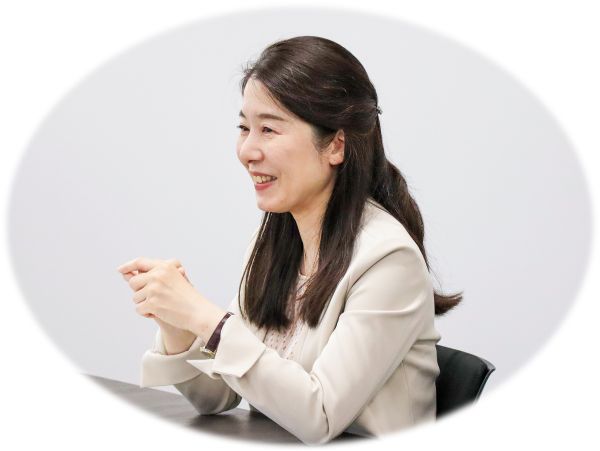
The Benefits of Diverse Perspectives and Values
I.E.However, as you all experience firsthand every day, the social environment has been changing at a dizzying pace in recent years—driven by the advancement of generative AI, intensifying global competition, and the impact of tariff policies. If companies cling to traditional, insular corporate cultures in such an environment, they risk falling behind in adapting to change, which could hinder corporate growth.To adapt to these changes, it is essential to embrace diverse values—in other words, diversity-driven management *2.
As a concrete initiative, I believe it is effective to bring in diverse talent from outside the company. The presence of outside directors like myself is one example; our Board of Director Meeting is structured such that outside directors constitute a majority, and among them, women make up the majority—indicating that we are ahead of societal standards in establishing this framework.Appointing a diverse workforce is essential not only for recognizing the company’s strengths but also for objectively examining its challenges and gaining new insights.
In recent years, several violations of the Antimonopoly Act have occurred at our company; however, a common thread among many scandals involving Japanese companies is that the perpetrators acted “not for personal gain, but with the belief that they were acting in the company’s best interest.”The mindset that “anything goes as long as it’s for the good of the company” indicates a problem with the corporate culture and organizational climate that fosters such thinking. In my role as a member of the Audit and Supervisory Committee, I aim to be a constant voice that points out these misguided perceptions and organizational cultures and helps raise awareness.
Sugiyama-san- *2 A management approach that fosters innovation and leads to value creation by leveraging a diverse workforce and providing opportunities for employees to fully utilize their abilities
Source: Ministry of Economy, Trade and Industry website
I.E.Within our group, there are times when I sense a certain degree of siloed thinking among business divisions. However, in recent years, we’ve seen opportunities for synergy emerge, such as when divisions pool their respective technologies to create new businesses. As collaboration between divisions progresses, it also fosters the exchange of talent. This, too, can be seen as a concrete initiative toward embracing diversity.
ShinMaywa The Group is currently in the midst of transformation. Our ideal is not to let this movement end with merely establishing a framework, but to elevate it into an environment where all employees feel genuinely accepted, and to see that take root as our corporate culture. To realize this vision, I believe it is crucial that each individual—rather than leaving it to others—be mindful of building such an organization.
Sugiyama-sanBuilding Trust in Business
S.M.Earlier, I spoke about changing our culture, but of course, there’s no need to change the things we’ve cherished and passed down, such as the “ShinMaywa Group Philosophy.” The ShinMaywa Group gives the impression of being very earnest and reliable, and in terms of approaching matters with sincerity, it already possesses the necessary qualities.
By embracing diversity and making the most of the changes it brings—that is, further developing its strengths and steadily addressing its challenges—I expect that, through this cumulative effort, the ShinMaywa Group will grow into an even better company that keeps pace with the times.
Sugiyama-san