
Plasma Ion Processing System
Technical Information
What is Plasma Ion Processing System?
Plasma (ion) processing is a surface modification technology using ions generated by plasma.
As application examples, it is used for nitride processing and shape improvement of metal working tools.
Sharpening of cutting tools by Plasma treatment
Diamond coated cutting tool
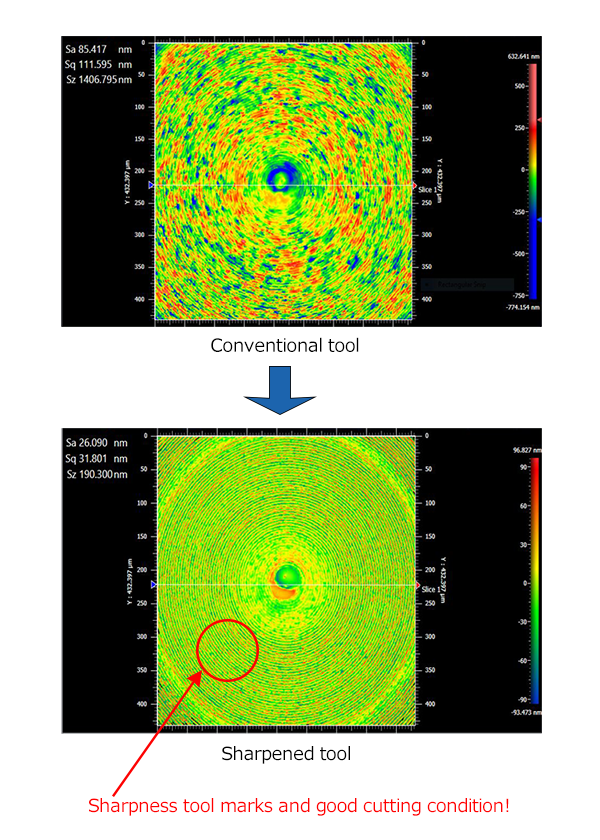
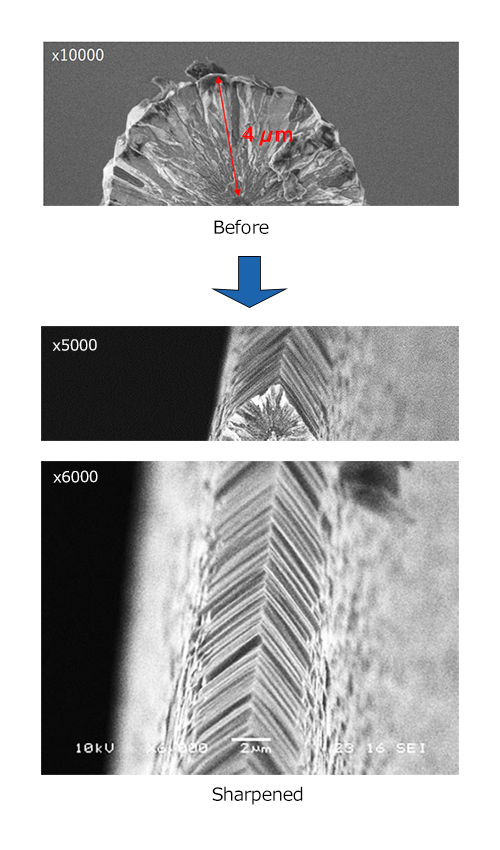
Sharpening of Diamond coated tools by unique plasma treatment
Diamond coating achieves the improvement of wear resistance and longevity!
However... the cutting edge is rounded...
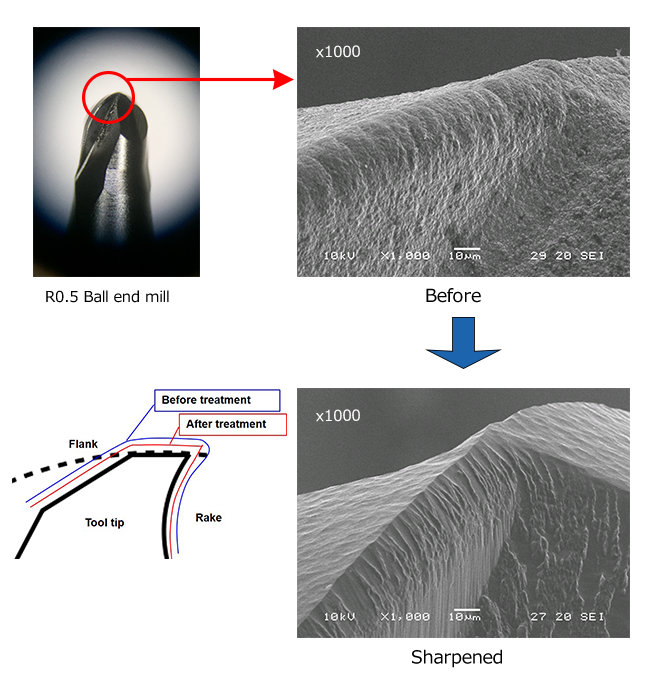
Sharpens the coating itself without damaging the base material
Cutting test with sharpened diamond coated tool
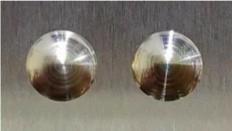
(Right) Machined surface by sharpened tool
| Tool | R0.5 diamond coated ball end mill |
|---|---|
| Work | Ultra-fine grained carbide (lens-shaped processing) |
| Evaluation | Comparison of surface condition of machined surface
|
Diamond coated blade
Plasma Nitrile Treatment
Principle of Plasma Nitriding
A hollow cathode type plasma generator creates nitrogen plasma and introduce it into the vacuum chamber.
Nitrogen plasma ions are accelerated by the bias voltage applied to the specimen, bombarding. Nitrogen-based intermetallic compounds are createsd on the surface of the specimen.
Characteristics of Plasma Nitriding
- By using gases with low environmental impact, we achieve clean plasma processing that is gentle on the working environment.
- Efficient plasma generation enables stable surface modification.
- It can be applied to a wide range of metal materials, including stainless steel.
Advantages
- Improved durability due to increased surface hardness.
- Improved wear resistance contributes to a longer lifespan.
- In addition to improving corrosion resistance, it can also be applied to improving adhesive strength and surface functionality.
- The surface cleaning effect is expected to improve adhesion and stabilize quality in subsequent processes.
- By utilizing this in pre-treatment before bonding or painting, we can expect to improve yield.
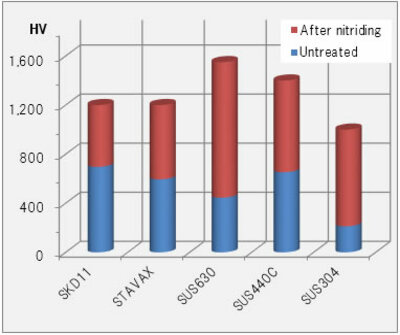
Surface hardness of various materials
| Before treatment (HV) | After treatment (HV) | |
|---|---|---|
| SKD11 | 697 | 1200 |
| STAVAX | 595 | 1200 |
| SUS630 | 446 | 1550 |
| SUS440C | 653 | 1400 |
| SUS304 | 213 | 1000 |
Application examples
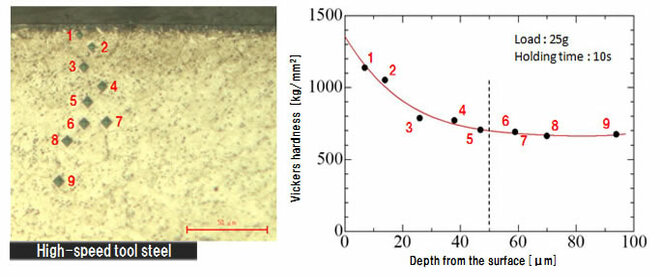
Application to high speed tool steel
A cross-sectional view of high-speed tool steel after nitriding treatment (left) and hardness change from the surface (right) are shown.
Measure several points from the surface to the depth using a Vickers hardness tester.
The surface hardness varies depending on the target material and processing conditions.
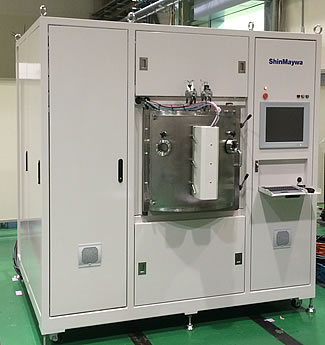
System specifications
| Specifications | |
|---|---|
| Size | W 2,200mm |
| D 2,100mm | |
| H 2,650mm | |
| Weight | Approx. 2,600kg |
| Gas | Ar, N2 |
| Temp. | <500℃ |
| Plasma source | 1 unit |
Expected future applications
- Improving the adhesive strength of resin parts by modifying the resin surface.
- Improved paintability and printability through hydrophilic treatment.
- Formation of a functional surface through water-repellent treatment.
- Improving the quality of lamination and printing processes through film surface treatment.
- Improved adhesion of resin and metal composite materials through pre-treatment before bonding.
- Improved productivity through application to in-line processing steps.
- Process optimization through combination with atmospheric pressure plasma treatment equipment and plasma cleaner technology.
Contact Information
For product inquiries, please click the button below
Search for other products and services
ShinMaywa INSIGHT