
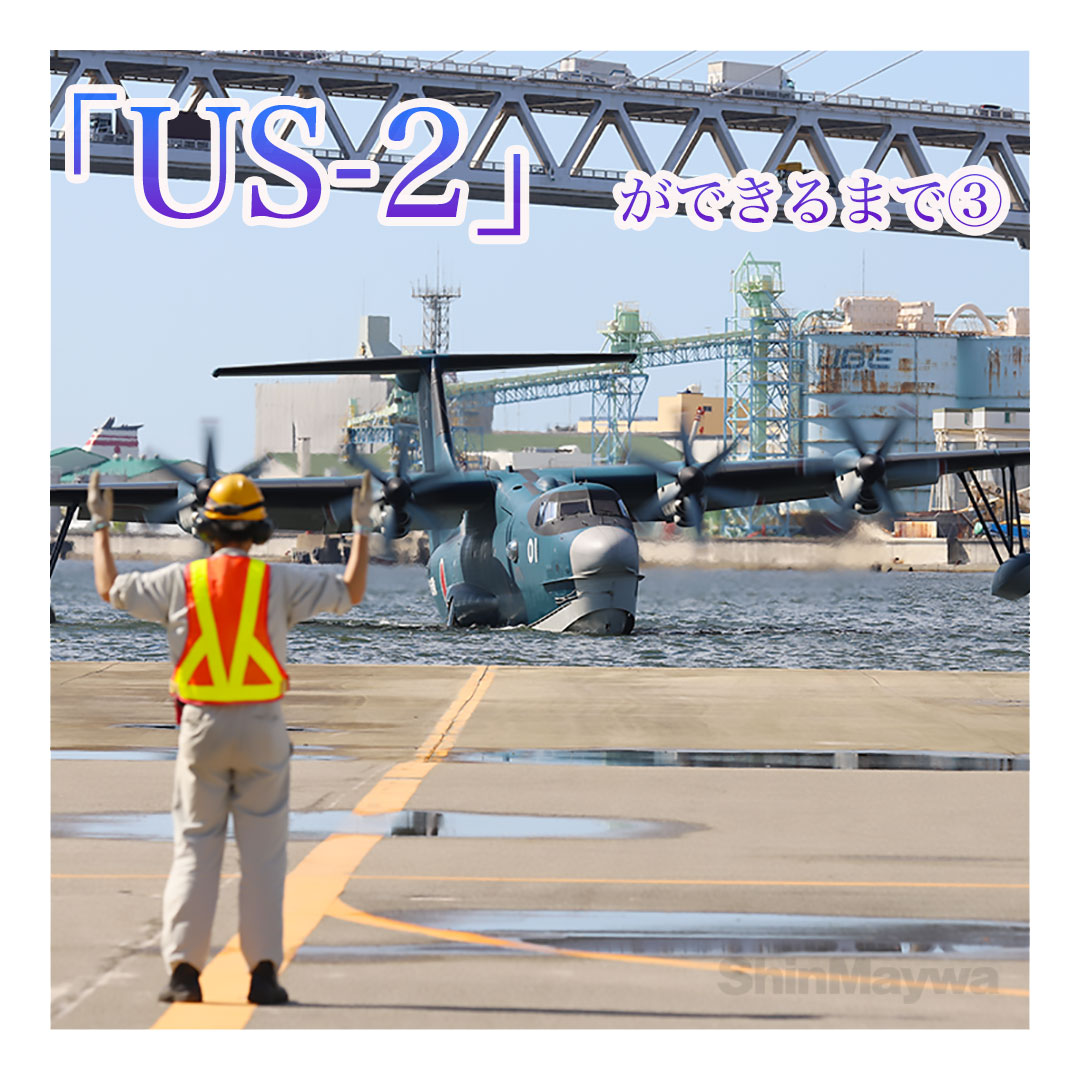
[Series] How the US-2 is made (3)
Close coverage by a professional writer
Surface treatment
—Making parts resistant to corrosion and strong against seawater
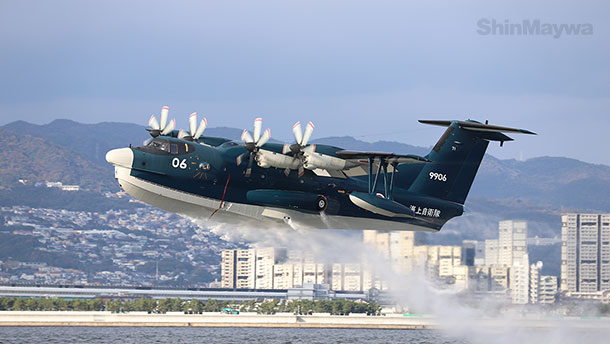
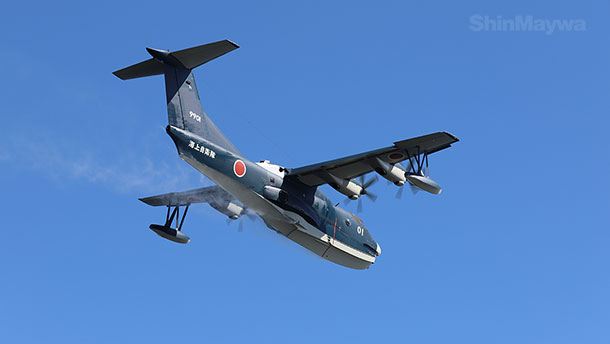
As described in the first issue of this series, the US-2 is mostly made of aluminum alloy. Aluminum is a relatively corrosion-resistant metal. However, seawater is still its natural enemy. Unlike other aircraft, the US-2 is routinely exposed to seawater. There is a "wash rack" facility at air bases of the Japan Maritime Self-Defense Force, where airframes are washed entirely to rinse salt off after each flight. This is one of the treatments to prevent corrosion.
Since the US-2 is operated under such harsh conditions, thorough measures against corrosion are taken from the time of manufacturing. That is to say, surface treatment and coating (the coating process will be introduced in the next issue).
As the name implies, surface treatment is a process which is applied to metal surface to change its properties. Its purposes vary: increasing wear resistance, creating a glossy and beautiful look, strengthening against heat, or scraping off part of the surface. For aluminum parts of the US-2, several surface treatment methods are performed mainly to improve corrosion resistance and to prevent the coating from peeling off. Konan Plant has a dedicated facility for surface treatment where most of the parts are processed.
Surface treatment methods vary according to the material, such as aluminum alloy or stainless steel. Furthermore, titanium alloys and composite materials are naturally resistant to corrosion so no surface treatment is required.
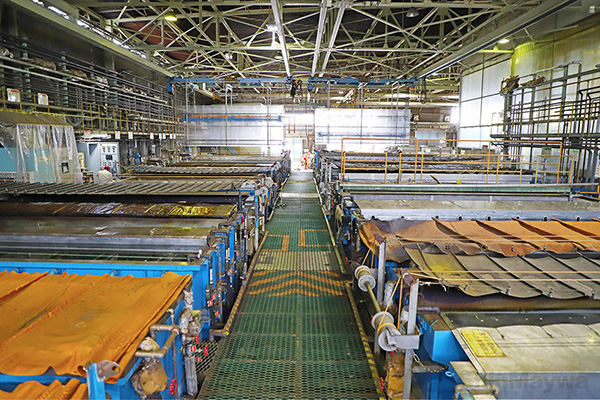 (1) This is the surface treatment facility at Konan Plant. Large tanks filled with chemical solutions are lined up. Different solutions are used for different processing methods.
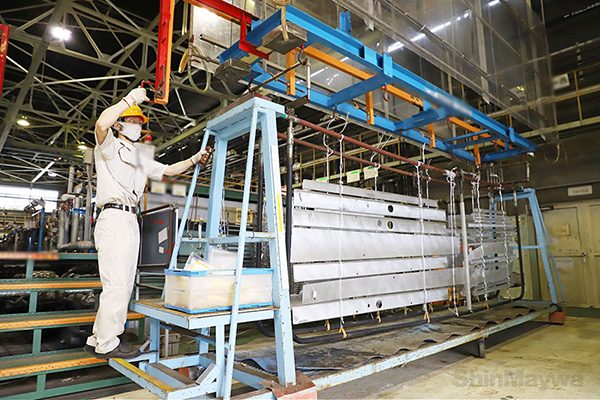 (2) Parts are set on the rack for surface treatment. Racks are pulled up with a crane and raised and lowered on tanks for surface treatment.
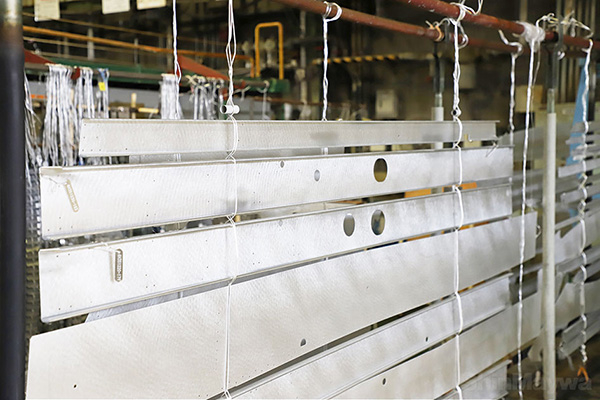 (3) Set the parts so that they do not overlap each other and all parts are evenly immersed in the chemical solution. Remember to fine-tune the tag so that it does not stick to the component.
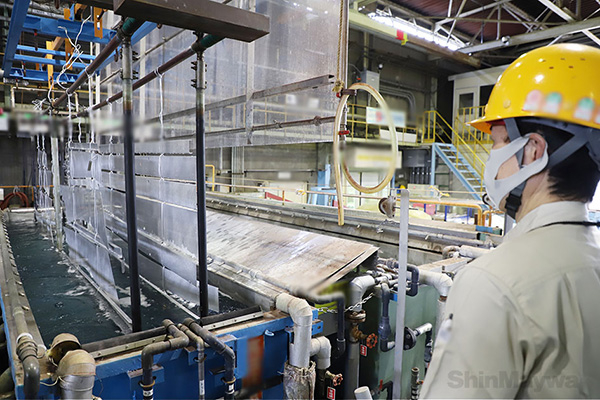 (4) Materials are washed first. Because various impurities such as aluminum scraps and finger grease have adhered to the parts during the previous processes.
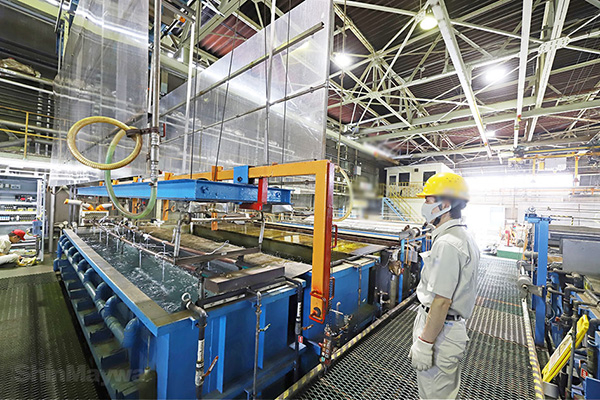 (5) Next, the parts are soaked in the tank with a chemical solution. Detailed specifications are defined for each type of processing, including the chemical type, concentration, temperature, and the period to soak the materials.
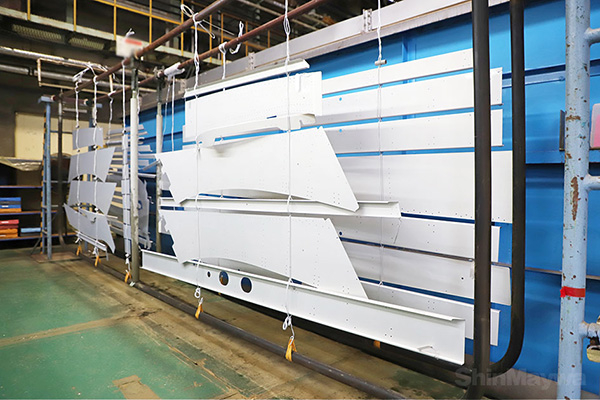 (6) Parts are dried and the surface treatment process is completed. In general, it is necessary to proceed to the subsequent coating process within a specified time after surface treatment.
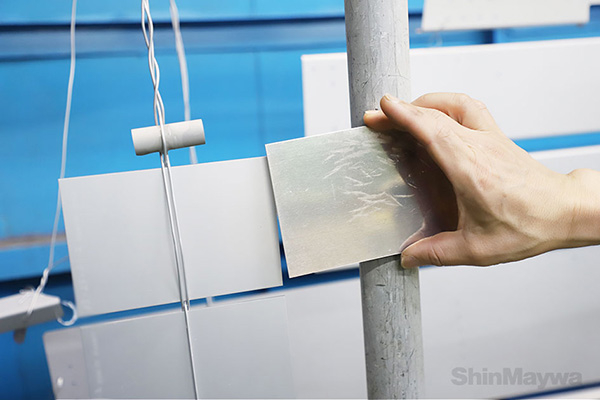 (7) These are aluminum alloy parts after and before surface treatment (being held by an operator’s hand). It looks completely different, and it is hard to believe that these are same material.
Writer Hidenori Itakura
- *This series is produced and published with the permission of the Ministry of Defense. Please do not reproduce the content and images of this series.