


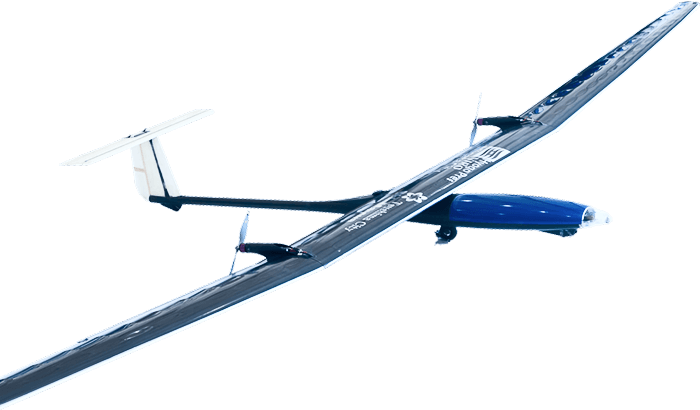
Pioneering the future of aviation technology
Since 2015, we have successfully developed and tested a variety of prototypes by applying the technology and experience we have accumulated.
We can design and develop aircraft to meet the needs of our customers.
















Prototypes for Future Aircraft


- Special Features
-
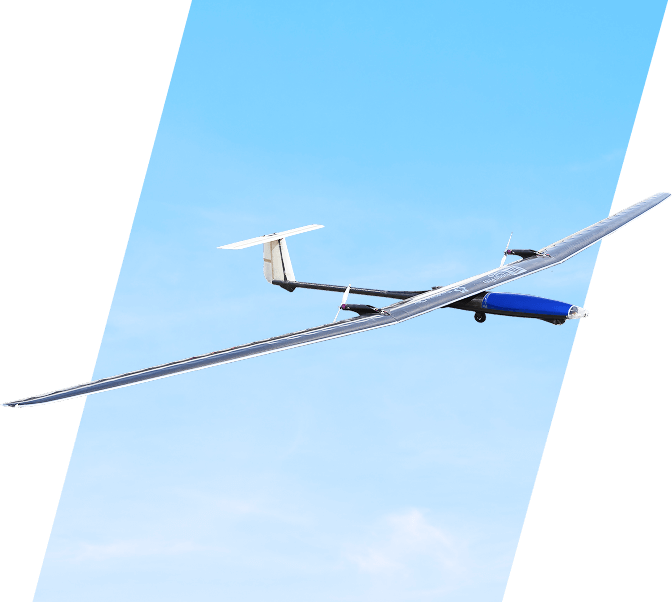
- -Capable of long-duration (approx. 4hours), long-distance (approx. 150km) flights.
- -Capable of carrying observation equipment up to 4kg
- -Beyond visual line of sight (BVLOS) flight made possible via satellite communication.
Prototype development began in 2018 in response to the growing demand for unmanned aircrafts (UAVs) capable of conducting long-endurance observation and surveillance missions, and for UAVs serving as communication relay platforms. The first prototype was operated from 2019 to 2022, during which research was carried out on automatic control and communications technologies. It also took part in demonstration projects conducted in collaboration with industry, government, and academia. In 2021, the prototype completed the first Level 3 UAV flight at an airport with regularly scheduled commercial service, in Tsushima City, Nagasaki Prefecture, and successfully carried out aerial surveys of marine debris.
- Technical Specifications
-
- Total length: 2.5m
- Wingspan: 6.0m
- Weight: Less than 25kg
- Power Unit: Electric motor


- Special Features
-
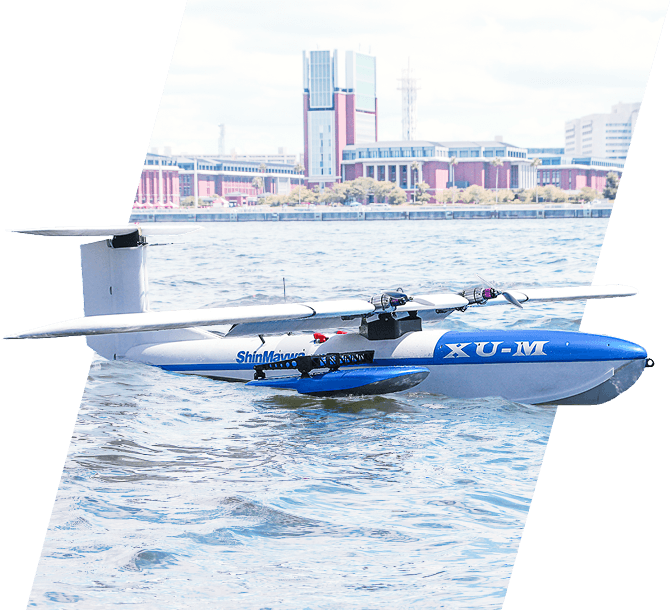
- -Semi-monocoque structure made of CFRP and PP resin
- -Built on ShinMaywa’s amphibious aircraft technology and know-how
- -Suitable for testing and validating automation technologies and conducting marine research
Applying hull design technologies cultivated in the development of the US-2, this aircraft was created to support research into automatic water-landing control. Test flights were conducted in Osaka Bay, successfully generating the data required for automatic landing. In 2022, a demonstration flight was carried out at the inaugural Drone Summit held on Port Island.
- Technical Specifications
-
- Total length: 3.0m
- Wingspan: 4.0m
- Weight: Less than 25kg
- Power Unit: Electric motor / Gasoline engine


- Special Features
-
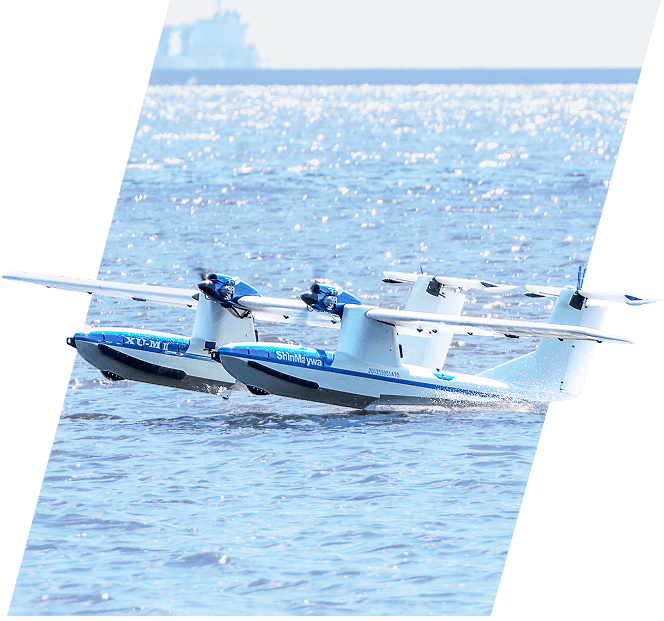
- -Lightweight twin-hull design enabled by a full CFRP monocoque structure
- -Redundant control, power supply, and thrust systems enable remote engine starting at sea
- -Designed of high payload capacity and expandability
This 1/5-scale twin-hull test platform serves as a precursor to the development of a larger unmanned amphibious aircraft. Building on prior research, its structure and control systems have been redesigned to significantly enhance safety and expandability. To support a wide range of ocean observation and surveillance missions, the aircraft is designed to accommodate payloads on pylons located towards the center of the wings, as well as within the hull.
*XU-MII is a deliverable from the JST commissioned research project "Construction of an efficient and mobile autonomous underwater vehicle (AUV) ocean observation and survey system using unmanned aerial vehicle technology."
- Technical Specifications
-
- Total length: 3.9m
- Wingspan: 5.5m
- Weight: 80kg
- Power Unit: Gasoline engine


- Special Features
-
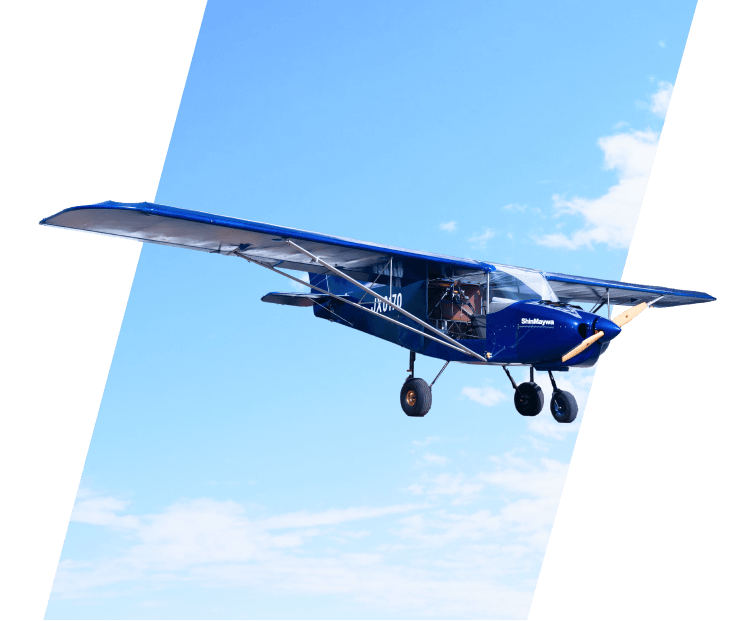
- -A modification of an existing plane model, used for testing of a variety of technologies
- -Capable of flight testing large and complex systems unique to large UAVs
- -Equipped with an OPV (Optionally Piloted Vehicle) control system, enabling automatic flight.
In 2024, the aircraft was equipped with an OPV (Optionally Piloted Vehicle) control system*1 comprising a flight control computer, actuators, and communication systems, and successfully achieved automated flight in response to instructions from the ground. The XU-L is a modification of a manned aircraft, developed as a large and reliable experimental aircraft for testing systems. In 2022, under a joint research program with Yamaha Motor Co., Ltd., the XU-L successfully completed a flight using a Yamaha engine. In 2024, the aircraft was equipped with an OPV (Optionally Piloted Vehicle) control system comprising a flight control computer, actuators, and communication systems, enabling successful automated flight under ground-based control.
※1An OPV (Optionally Piloted Vehicle) control system allows the pilot to switch from manual pilot control to computer-controlled autopilot mid-air.
- Technical Specifications
-
- Total length: 6.0m
- Wingspan: 10.0m
- Weight: Less than 550kg
- Power Unit: Gasoline engine
- Modified mother aircraft: RANS type S-6


- Special Features
-
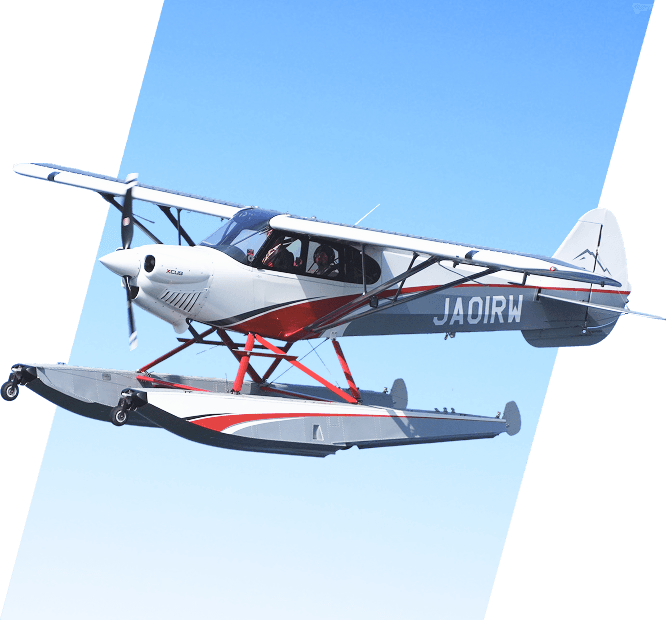
- -The XU-LⅡis an existing aircraft model that has been modified for use as a testbed in the development of a large unmanned aircraft.
- -It is an amphibious aircraft that enables a wide range of technical verification, including automatic takeoff and landing.
- -The aircraft is capable of amphibious takeoff and landing, providing a high degree of operational flexibility.
Our aim is to achieve automated takeoff and landing based on sensor input by enhancing the OPV (Optionally Piloted Vehicle) control system initially developed under the preceding XU-L program. We will conduct proof-of-concept (PoC) testing for the K-Program research topic, “Developing an Ocean Observation, Monitoring, and Survey System Using KAIKU (Sea-Air) Unmanned Vehicles,” through operational tests in coordination with AUVs. The modification work and tests are currently scheduled to take place from 2026 to 2028.
AUV:Autonomous Underwater Vehicle
PoC:Proof of Concept
- Technical Specifications
-
- Total length: 7.3m
- Wingspan: 10.5m
- Weight: Less than 1043.3 kg
- Power Unit: Gasoline engine
- Modified mother aircraft: Kabucrafters CC19-180


Coming soon
Rapid Prototyping: From Concept to Completion
Our team can develop prototypes in a just a few months, from design to rollout.
ShinMaywa Industries is one of the few prime aircraft manufacturers in Japan. When it comes to experimental aircraft, we handle everything in-house—from initial concept design to production.
Our team members do more than just one part of the job. By being involved in every stage, from designing and manufacturing to testing, they build broad expertise and hands-on experience across the entire development process.
The Step-by-Step Process of Developing a Prototype


Ongoing Projects
We are currently involved in two projects under the Cabinet Office’s Key and Advanced Technology R&D through Cross Community Collaboration Program (K Program), actively advancing research and development that will help shape the future of Japan’s aircraft industry. We will continue to promote collaboration and information sharing as we work toward creating new services.
HAPS
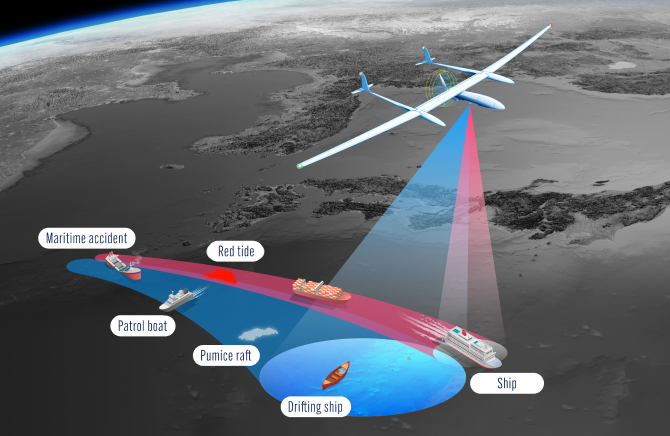
Developing and demonstrating Maritime Domain Awareness (MDA) technology using high-altitude Unmanned Aerial Vehicles (UAVs)
To establish remote sensing technology using HAPS*, we design, manufacture, and operate aircraft equipped with the functions and performance for demonstration in the harsh stratopheric environment. Under a five-year plan launched in FY2024, we will conduct technical demonstrations of remote sensing equipment in the actual stratospheric environment in the final year, FY2028.
High Altitude Platform Station (HAPS): An unmanned aerial vehicle capable of extended continuous flight in the stratosphere without landing. The aircraft is envisioned for use in communications when equipped with communication devices, and in observation when equipped with remote sensing equipment.
KAIKU Unmanned Vehicles
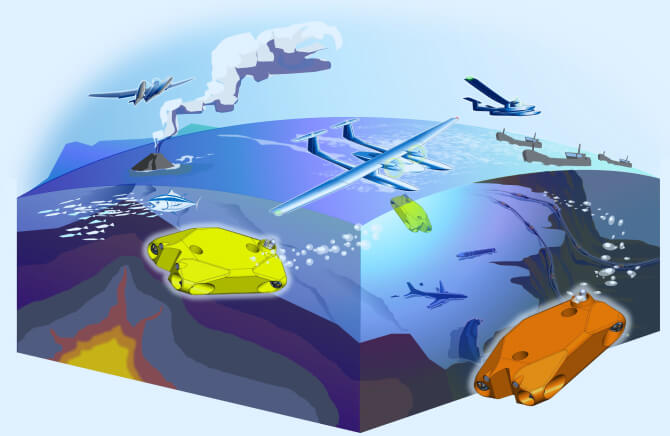
Development of the Ocean Observation, Monitoring and Survey System Using KAIKU (Sea-Air)Unmanned Vehicles
With the goal of improving the efficiency and safety of marine surveys, we will develop an unmanned amphibious aircraft system capable of transporting AUVs to survey areas rapidly and performing fully automated deployment and recovery.
We plan to conduct pilot testing over a period of up to 10 years beginning in FY2024, and to use the results to support the development of new products.
Future Aircraft